



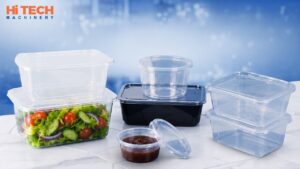
Thin wall food containers are something you see almost every day.
When you order biryani, bring take-away food home, or buy frozen meals, these containers are always there. These simple items play a key role in the food packaging industry.
Made of food-grade polypropylene (PP) material, these boxes are safe for food contact.
The interesting part is this: thin wall container manufacturing is not just a production activity. It is a proper, profitable industrial business model.
These containers have a huge demand, coming mainly from restaurants, food delivery services, frozen food companies, and small home-based food businesses.
All of them need affordable and reliable packaging every single day.
So, is thin wall boxes manufacturing a profitable venture? Can it provide stable profits?
Read this guide till the end and get your answer.
Types of Thin-Wall Food Containers
Thin wall containers are not all the same.
They are in different sizes and shapes as per the type of food and customer requirements.
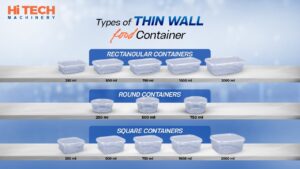
A range of thin-wall boxes that can be manufactured for different requirements are these:
Based On Volume
Thin wall containers can be produced with a volume of 25 ml to 6 litres.
However, the most commonly produced sizes are the following:
- 250 ml containers
- 500 ml containers
- 750 ml containers
- 1000 ml containers
- 2000 ml containers
Every size has its own utility and targeted industry.
For example, 250 ml containers are good for sauces, 500/750/1000 ml are used for snacks and single meals, and 2000 ml size is for family meals or bulk food packaging.
Based On Shape
Along with size, thin wall containers can be categorized based on their shapes, such as:
- Round Containers
- Square Containers
- Rectangular Containers
Rectangular-shaped boxes are most popular; they are used in meal prep, takeaway meals, etc. Square boxes are good for dry goods and baked items.
Round containers are used to carry liquids, sauces, soups, noodle bowls, yogurt, etc.
Set Up Required for Thin Wall Container Production
To start thin-wall container manufacturing, you need a proper injection molding-based setup.
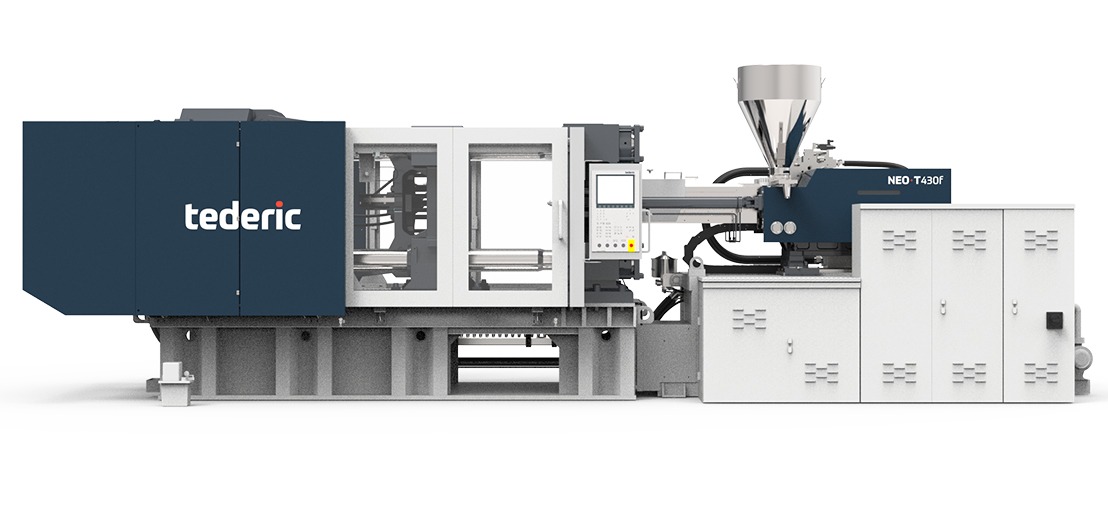
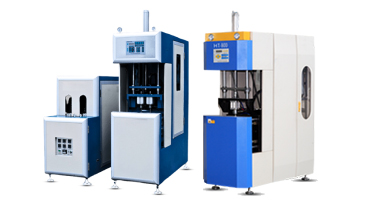
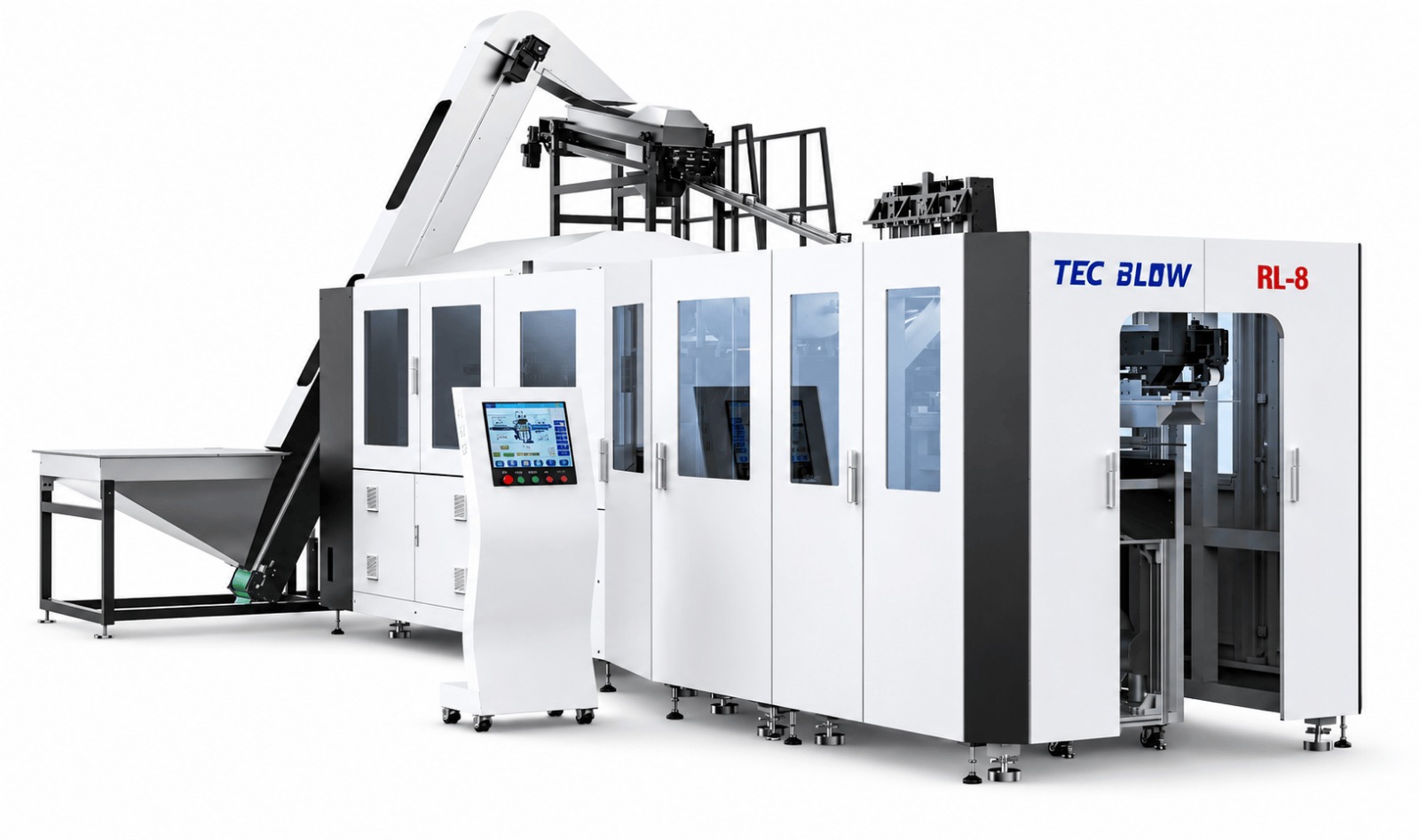
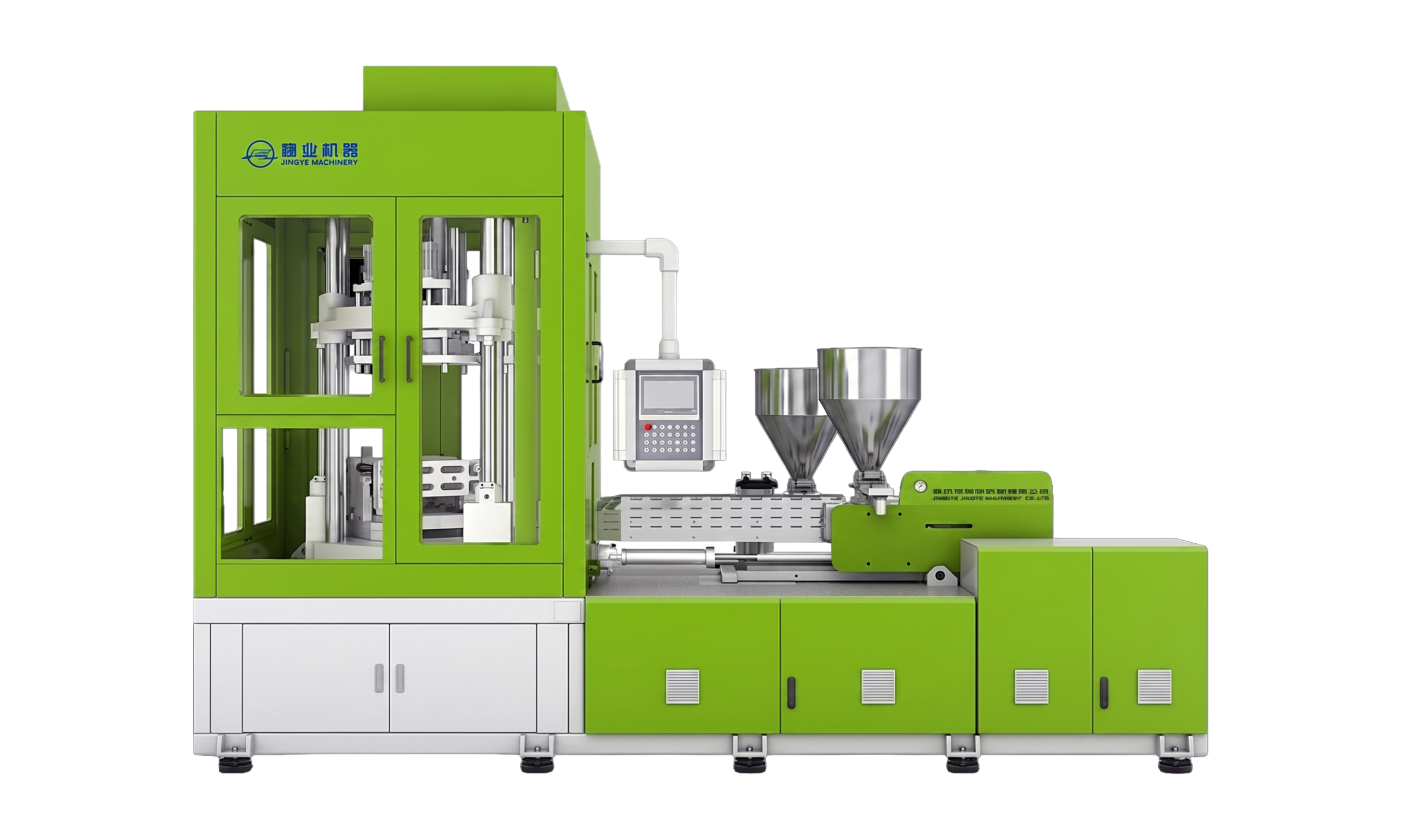
The heart of this business is the Injection Molding Machine (IMM). Its primary motto is to melt raw plastic material and then inject it into molds to form containers.
Since thin-wall containers include both box and lid, you cannot rely on a single machine.
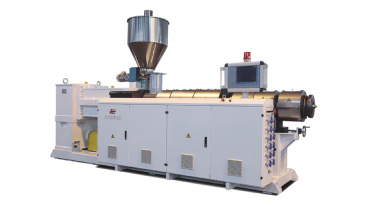
You need a dual injection molding machine production system. Along with it, you need all the necessary auxiliaries for each IMM machine.
That said, this is the complete setup for thin-wall container manufacturing:
| Name of Commodity | QTY | Unit Price (USD) | Total Price (USD) |
| Injection Molding Machine | 2 | $ 85,000 | $170,000 |
| Box & Lid Mold | 2 | $40,000 | $80,000 |
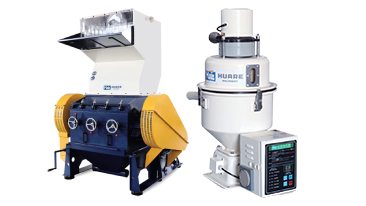
| Vacuum Autoloader | 2 | $ 400 | $800 |
| Hopper Dryer | 2 | $ 100 | $200 |
| Crusher / Granulator | 1 | $ 2,000 | $2,000 |
| Chiller Air Cooled Cased | 2 | $ 6,000 | $12,000 |
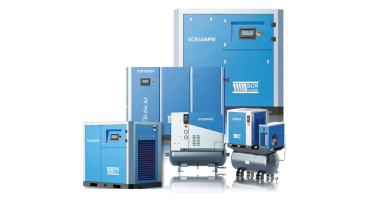
| Screw Air Compressor | 1 | $ 6,500 | $6,500 |
| Air Dryer | 1 | $ 1,000 | $1,000 |
| Air Filter | 1 | $ 300 | $300 |
| Air Storage Tank | 1 | $ 2,000 | $2,000 |
| Take Out Robot 3 Axes | 2 | $ 8,500 | $17,000 |
| Conveyor Belt | 2 | $ 1,500 | $3,000 |
Total FOB China Cost ≈ $294,800 USD / PKR 82 Million
Remember, all these prices are FOB China ex-factory in USD. It means the actual setup cost can vary based on ex-company prices and dollar-PKR conversion rates.
Production, Profit, and ROI of the Setup
Now we come to the most important part of this business: how much you can produce, how much it costs, and how much profit you can make.
NOTE: Here, we will focus only on a 1000 ml rectangular thin wall container, since it is one of the most commonly used products in Pakistan.
Production
Production of a thin-wall containers depends on cycle time, machine efficiency, and mold design.
With this setup, you can produce 1800 to 4320 1000ml rectangular boxes in one hour.
This is a wide range because production speed depends on multiple factors. Cycle time also changes based on machine technology:
For example, higher-end Tederic-based setups provide faster cycle times of about 5-7 seconds, which means more production. On the other hand, UWA-based setups have a higher cycle time (about 9-12 seconds), which means less production.
So in real factory conditions, output depends on how well the system is optimized, how skilled the operators are, and how stable the production environment remains.
Production Costs
Now let’s break down the cost per piece clearly, based on these factors:
Material Type: Food-grade PP
Current PP Material Rate: 610 PKR per kg
Weight Per 1000ml Set: 25 grams (box + lid)
Based on this calculation, total production cost becomes: 17 to 18 PKR per container
This cost includes more than just raw material. It also covers:
- Electricity consumption of machines
- Labor cost for operators and helpers
- Maintenance of molds and machinery
- Cooling system usage
- Air system operation (compressor and air dryer)
- Normal wear and tear of production setup
When all these factors are combined, the cost stays stable in the 17–18 PKR range if the system is managed properly.
Profit Margins
Now is time to talk about selling price, which is the most important part for business owners.
In the current market, the wholesale selling price per container is 22 to 25 PKR per piece.
Now we calculate profit:
At lower selling price: 22 – 18 = 4 PKR profit per piece
At higher selling price: 25 – 17 = 8 PKR profit per piece
This means every unit sold gives a direct profit margin.
On average, this business can generate up to 25% to 30% profit margin.
This is a strong margin for a manufacturing business that operates on high-volume production.
ROI Period
An important part of any business investment is the ROI (Return On Investment) period.
For the 1000ml thin-wall container manufacturing setup, which costs about 82 million PKR, the daily profit can range between 200,000 to 400,000 PKR if the factory runs at 75% efficiency.
This depends on production stability, market demand, and sales flow.
Based on this performance, the total investment can be recovered in 12 to 15 months.
This means the ROI period is relatively fast compared to many other manufacturing industries.
Is Starting Thin Wall Manufacturing a Good Idea?
Yes, this business has strong potential in Pakistan, especially for long-term growth.
The reason is simple: demand is already there, and it is growing every year.
Key industries driving this demand include:
- Food delivery services
- Restaurants
- Cafes
- Take-away food businesses
- Frozen food companies
- Cloud kitchens
- Home-based food brands
And the list goes on.
All these businesses depend on packaging every single day. Without proper containers, they cannot operate smoothly.
Another important factor is the growth of online food ordering in Pakistan.
More people now prefer ordering food instead of dining out. This directly increases the demand for disposable and reusable food containers.
Because of this, thin wall container manufacturing is not just a short-term opportunity. It is a long-term industrial business with consistent demand.
Team Up with HiTech Machinery to Get a Turnkey Solution
Starting a manufacturing setup is not only about buying machines. It also includes planning, installation, training, and long-term technical support.
That is why working with the right partner is very important.
HiTech Machinery provides complete turnkey solutions for thin wall container manufacturing. This means you do not need to manage different suppliers or systems separately.
Their complete services include:
- Injection molding machines and full auxiliary systems
- Complete installation and commissioning of the setup
- Operator training and technical guidance
- Repairing and maintenance services
- Local warranty support
- 24/7 technical assistance
This type of complete support system helps new investors reduce risk and start production faster without confusion.
So if you are planning to enter the plastic manufacturing industry, having a complete solution provider can make your journey smoother, safer, and more profitable.