



Hospitals and clinics need IV drip sets every day.
However, Pakistan still imports these medical supplies.
According to import data available on Volza, from July 2025 to June 2026, Pakistan received 1,557 shipments of infusion sets, facilitated by 315 exporters.
Pakistan has a population of around 26 crore and more than 700 pharmaceutical companies.
These figures show the size of the country’s healthcare market.
These figures, when combined with the import data, clearly represent a steady need for IV drip sets across Pakistan and a great local manufacturing opportunity.
If this idea has got your attention, read more about IV set manufacturing.
IV Drip Set (Intravenous Set) | Product Overview
An IV drip set is a single-use medical product.
It connects a fluid bag or bottle to a patient’s vein through a suitable medical access device. It helps deliver fluids and prescribed medicines at a controlled rate.
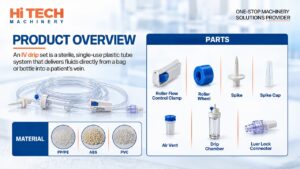
An IV drip set contains several parts, each serving a specific purpose.
- Roller Flow Control Clamp (Controls the flow of fluid through the tube)
- Roller Wheel (used to adjust the flow)
- Spike (connects the set to a compatible fluid bag or bottle)
- Spike Cap (covers the spike before use)
- Air Vent (allows air to enter the fluid container when needed)
- Drip Chamber (holds fluid droplets so the flow can be seen)
- Luer Lock Connector (Connects the tubing to a compatible medical device)
All the parts are made from different plastic materials, such as polypropylene (PP), polyethylene (PE), PVC, and ABS. The choice depends on the part’s design and required properties.
The plastic parts are only one part of the finished product.
The set also needs tubing and proper assembly.
Machines Required for IV Drip Set Manufacturing
Ideally, there has to be one injection molding machine for one IV set part.
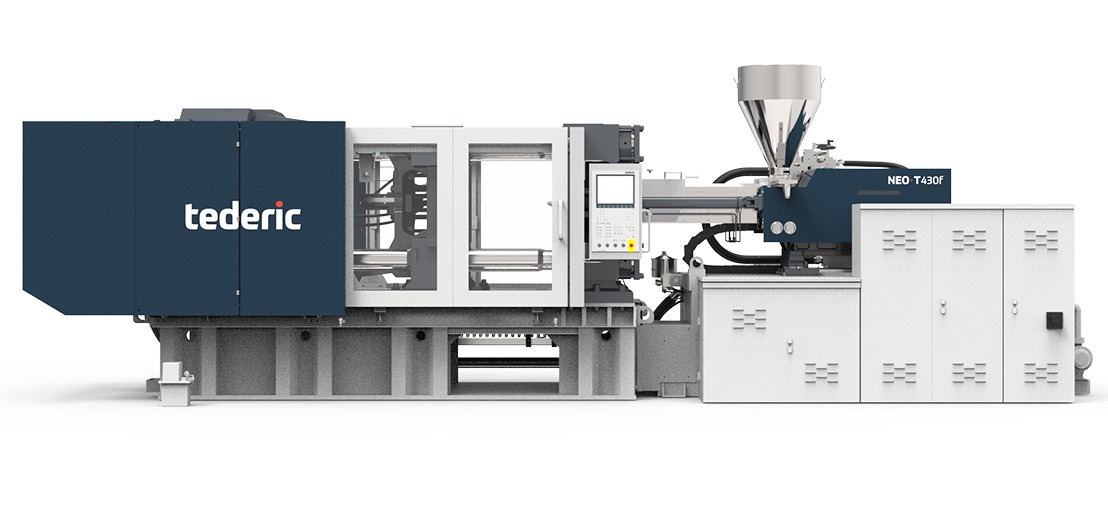
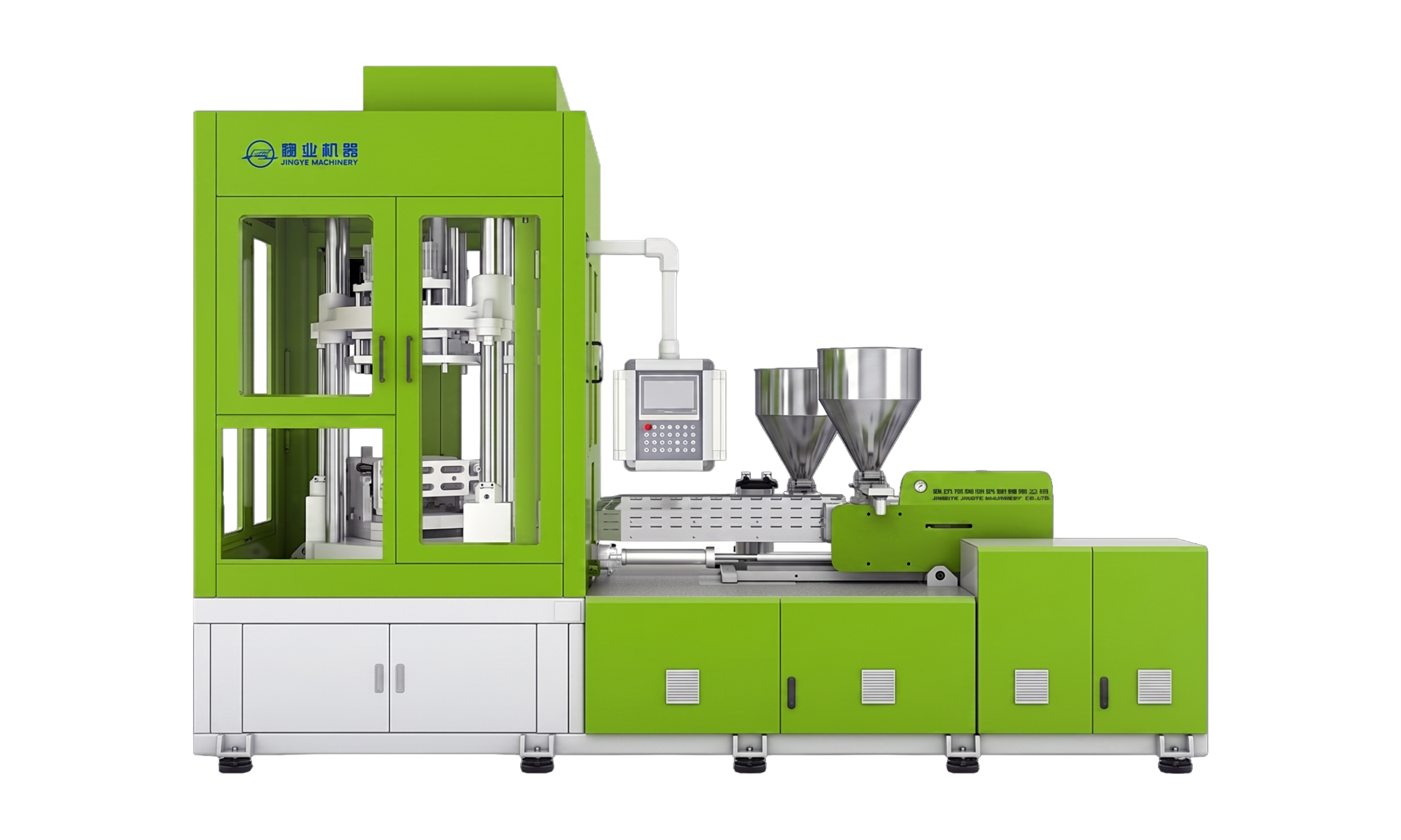
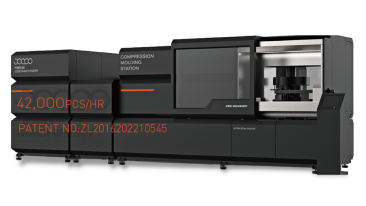
However, the proposed setup uses two Tederic servo-hybrid injection molding machines with E-Charging technology, molds, and supporting auxiliaries.
The machines are the Tederic DT160/i600 and DT200/i850.
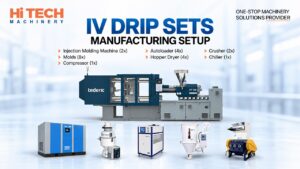
The complete setup includes the following equipment.
|
Equipment |
Quantity |
|
Tederic DT160/i600 |
1 |
|
Tederic DT200/i850 |
1 |
|
Molds |
8 |
|
Autoloaders |
4 |
|
Hopper dryers |
4 |
|
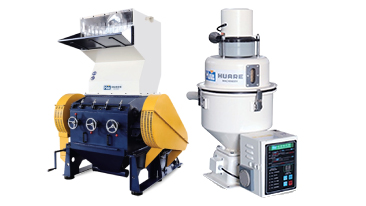
Crushers |
2 |
|
Chiller |
1 |
|
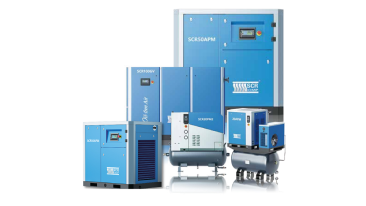
Air compressor |
1 |
The two injection molding machines make the plastic parts.
The estimated cost of this setup is around PKR 10 crore.
However, this estimated price doesn’t include the cost of an automatic assembly line. It only includes two injection machines, 8 molds, and auxiliaries.
How Would IV Drip Set Parts Be Manufactured?
The IV parts are made through a process called injection molding, using different molds.
Here are the eight molds available in the setup:
|
Molds |
Runner |
Cavity Nos. |
Qty |
|
Plastic Roller Flow Control Clump Mold |
Cold |
64 |
01 set |
|
Plastic Roller Wheel Mold |
Cold |
64 |
01 set |
|
Plastic Spike Cap Mold |
Cold |
64 |
01 set |
|
Plastic Air Vent Mold |
Cold |
64 |
01 set |
|
Plastic Spike Mold |
Semi Hot |
64 |
01 set |
|
Plastic Drip Chamber |
Cold |
32 |
02 sets |
|
Plastic Luer Lock Connector |
Semi Hot |
64 |
01 set |
*(These are two molds for the drip chamber in this setup since each carries 32 cavities. Two molds will have 64 cavities collectively, and will balance the production with the other parts.)
Manufacturing seven IV set parts on two injection molding machines through eight molds is a bit technical and a job to be executed thoughtfully.
The molds need to be changed frequently on both injection molding machines.
For example, one machine can produce roller clamps while the other makes drip chambers. Later, the molds can be changed to produce other components.
This means the machines do not have to make every part at the same time.
The production team must plan which parts to make and how many are needed.
Changing molds takes time.
So, the team must plan production carefully to maintain a suitable supply of every part.
Once all the parts are ready (in equal numbers), they move to the assembly stage.
Manual vs. Automatic Assembly
Once all the parts are ready, they must be joined together to form a complete IV drip set.
This stage also includes fitting the tubing, fluid filter, air filter, needle, and other parts.
There are two main ways to assemble IV drip sets.
Manual Assembly
Manual assembly means workers will assemble all or some parts of IV sets together by hand or with suitable tools. No prominent machines are needed in this method.
This method saves money and is perfect for businesses with a smaller production volume.
One drawback of this method is hygiene due to human involvement. Plus, production is low and heavily depends on the number of workers, their skills, etc.
Automatic Assembly
In automatic assembly, machines replace humans in assembling parts together.
The result? More production, better hygiene, and no headache.
However, automatic assembly equipment costs a lot of money. It also needs proper setup, maintenance, and trained operators.
Which One Should You Choose?
The choice between manual and automatic assembly depends on two things:
- Planned production volume
- Available budget
Plus, the finished sets must pass the required quality checks. These may include checks for leaks, fluid flow, and proper connections.
The newly made IV sets also require proper packaging and sterilization.
Medical-device production requires proper quality controls and the necessary approvals. Making the plastic parts alone is not enough.
Production & ROI Period of This Setup
The proposed setup has 64 cavities for the manufacturing of each part. The production rate is 7,680 to 10,473 pieces per hour, with a cycle time of 22–30 seconds.
However, these shouldn’t be treated as total number of complete IV drip sets made every hour.
The setup uses two machines to make several different parts.
Each machine must change molds to produce different components.
This affects the total production rate.
For example, making thousands of roller clamps does not mean the same number of complete sets can be assembled. The business must also produce enough drip chambers, spikes, connectors, and other parts.
The total output will depend on production time, mold changes, rejected parts, and assembly capacity (very important).
The estimated investment is around PKR 10 crore.
The expected return on investment (ROI) period is around 2 years.
However, this is an estimate, not a guarantee.
Actual profit depends on selling prices, orders, raw material costs, electricity, labor, packaging, sterilization, and other expenses.
HiTech Machinery Provides Turnkey IV Set Manufacturing
Getting into the business of IV drip set manufacturing needs more than injection machines.
The setup also needs molds, auxiliary equipment, installation, training, and technical support.
HiTech Machinery provides a complete solution with Tederic injection molding machines (as well as UWA), the required auxiliary equipment, and assembly equipment under one roof.
We also take care of installation, commissioning, local warranty, spare parts, maintenance, after-sales service, and much more.
If you’re really into starting this venture, now is a good time.
Contact the HiTech Machinery team for more information!