



It has been normal for people in Pakistan to buy loose milk for decades.
But now is the time people are shifting more toward packaged pasteurized milk.
People are becoming careful about eating and drinking clean. They understand that loose milk can get contaminated during transportation, contain dust, bacteria, insects, or added water.
All these concerns are moving them to choose pasteurized milk.
A big opportunity in this change is for the plastic manufacturers.
With the increase in the demand for packaged milk, the demand for plastic bottles also increases. Every milk brand and production expansion needs one thing: more milk bottles.
If you also want to get into plastic manufacturing, milk bottles can be your next direction.
Read this guide to learn about the machines needed, the total investment, production, profit, ROI, and other aspects of milk bottle production.
What Milk Bottles Are Made Of?
Let us start with the material.
Milk bottles are made from HDPE (High-Density Polyethylene) plastic.
HDPE is prioritized in dairy packaging since it is strong, lightweight, and safe for food contact. They are also semi-transparent, and customers can see the product inside.
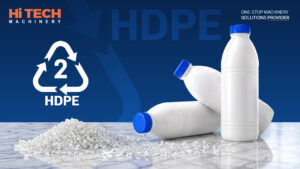
Milk bottles can be in any size, but the 1 to 2 litre size is the most common one.
These bottles can be with or without a handle, depending on the volume and requirements.
Since these bottles are used for food packaging, maintaining consistent quality during production is very important.
Milk Bottles Manufacturing Setup & Its Cost
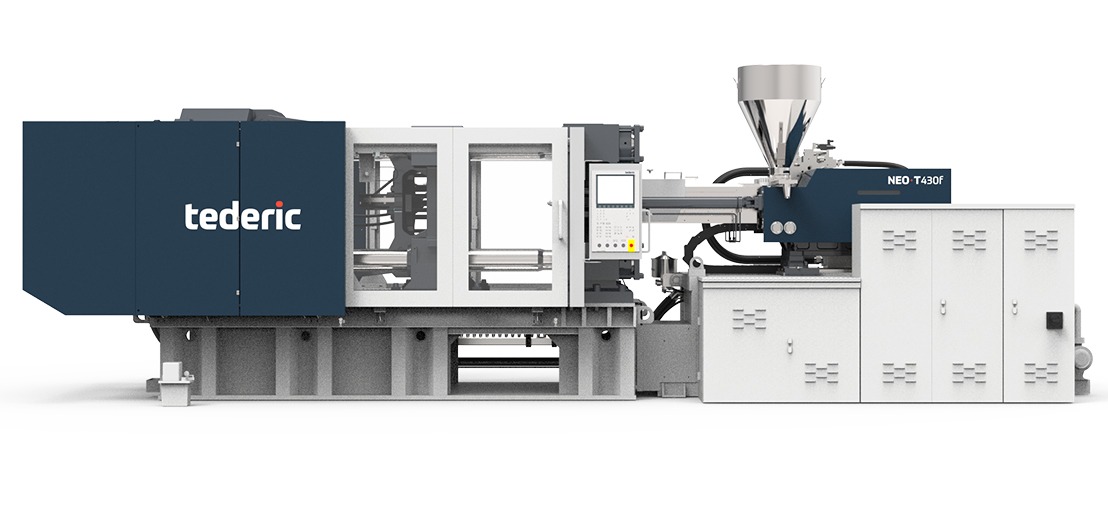
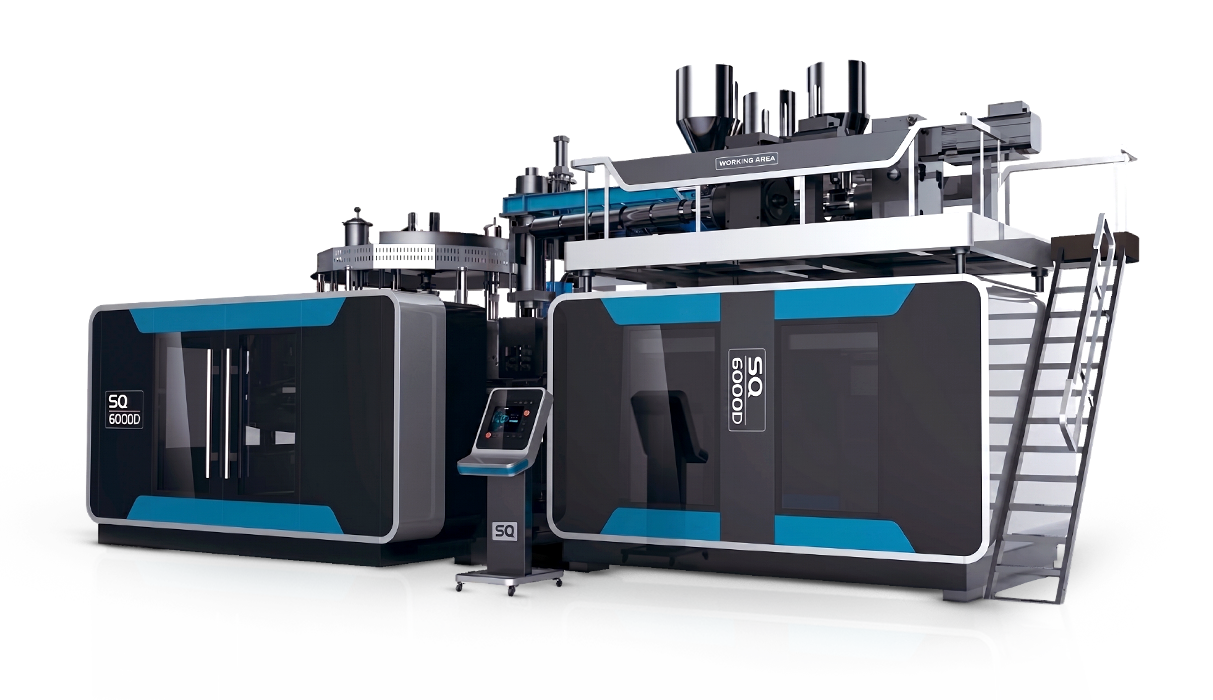
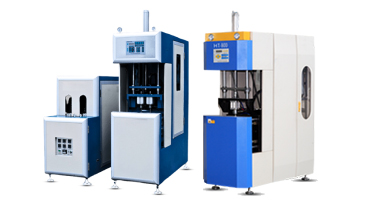
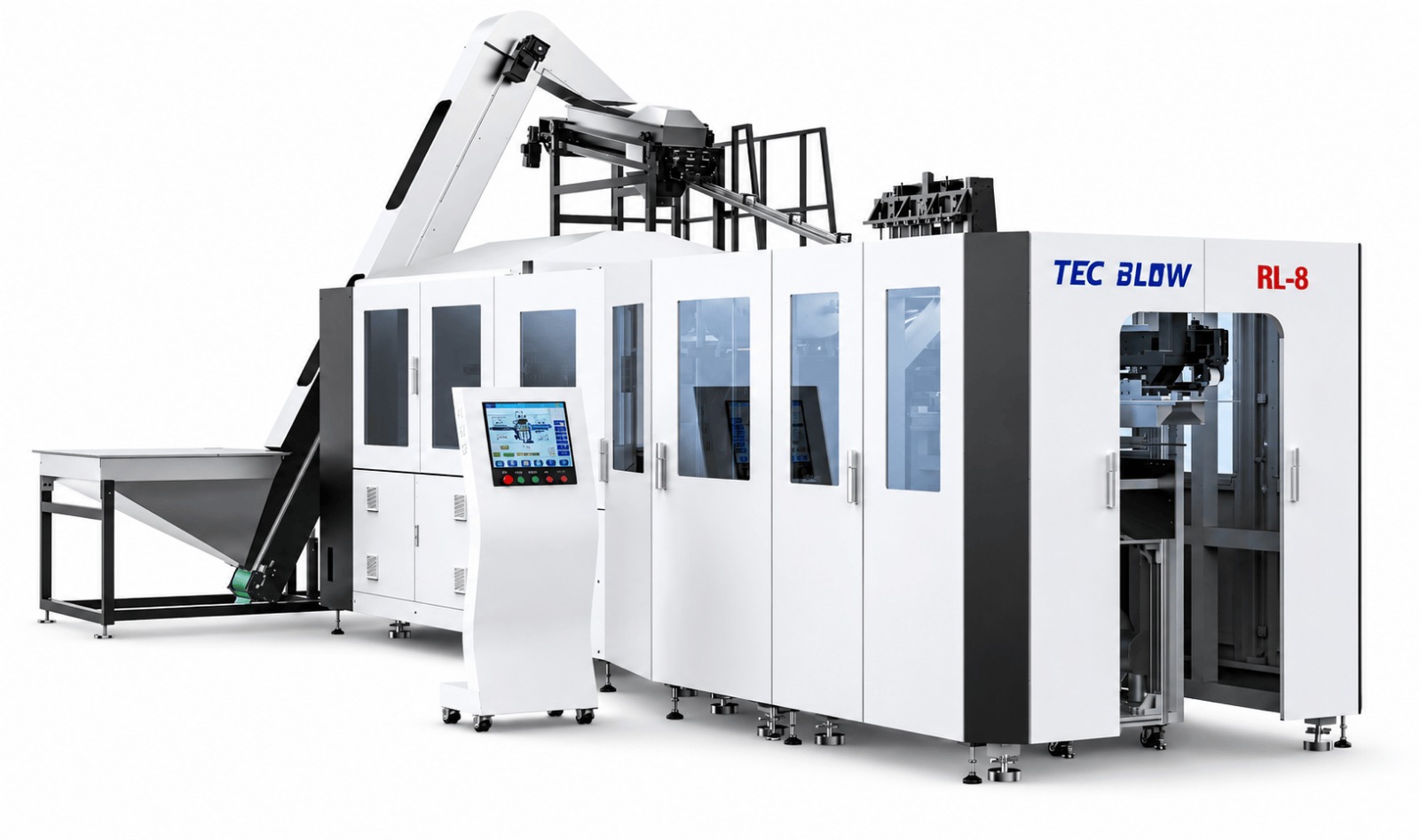
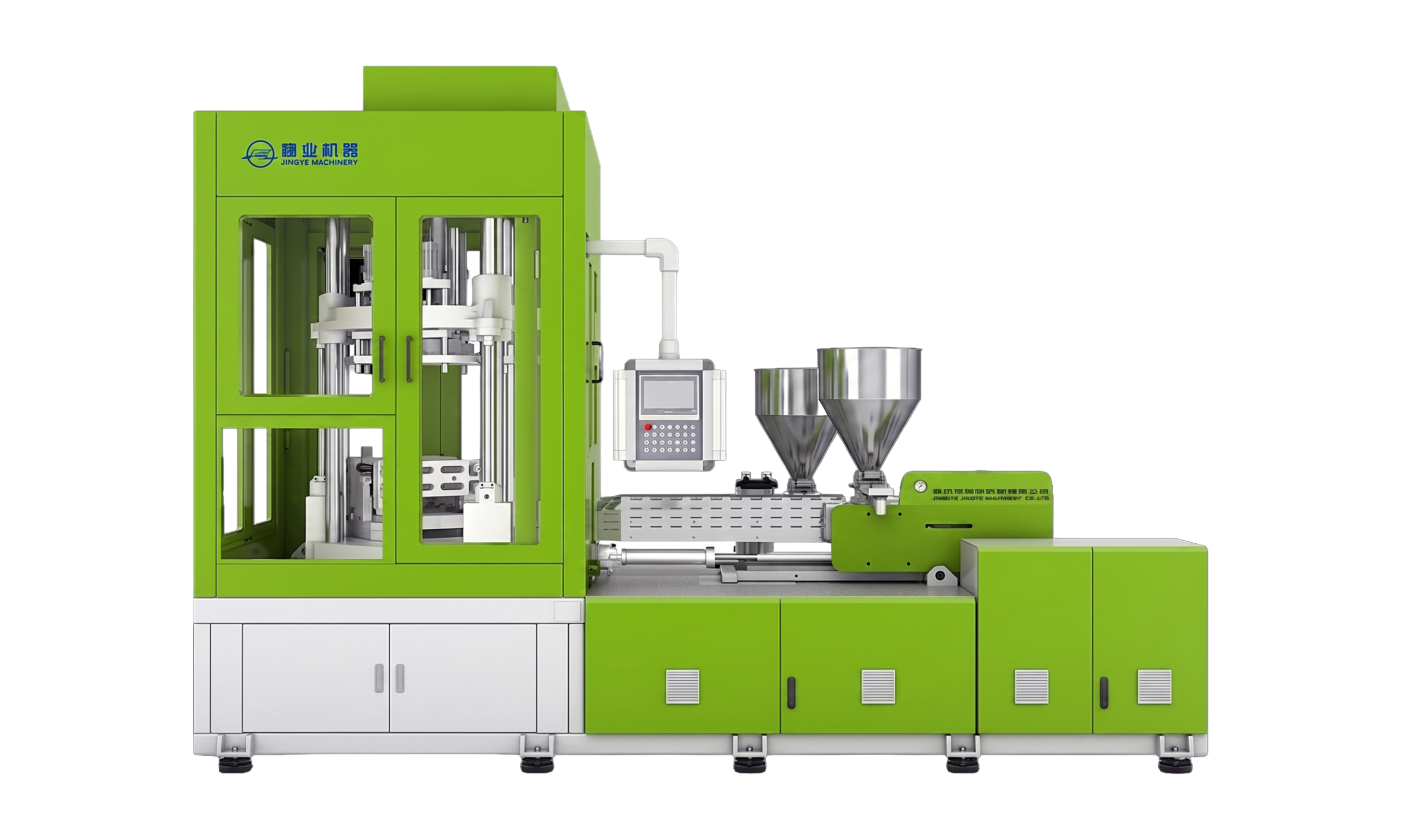
The main machine used for producing milk bottles is an Extrusion Blow Molding Machine.
It melts HDPE plastic and forms it into hollow bottles using compressed air inside a mold.
However, a complete production line includes more than just the blow molding machine. Several supporting machines are required to ensure smooth and continuous production.
A complete milk bottle manufacturing setup normally includes:
-
- 2-Station 2-Die Linear Extrusion Blow Molding Machine
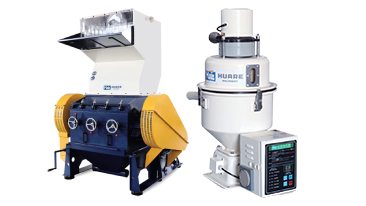
- Vacuum Autoloader
- Air Cooled Chiller
- Granulator or Crusher
- Air Dryer
- Air Storage Tank
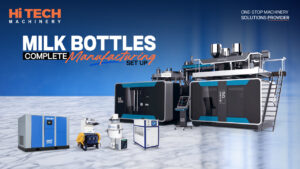
Each machine plays an important role in the production process.
The vacuum autoloader automatically feeds raw material into the machine.
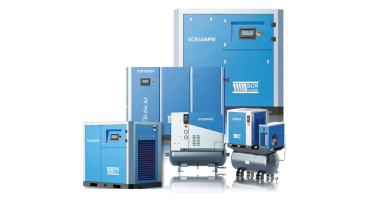
The chiller helps maintain the required cooling temperature. The air compressor supplies compressed air for bottle blowing.
The granulator allows manufacturers to recycle production waste, while the air dryer and storage tank help provide clean and stable compressed air.
For this type of setup, the total investment is generally around USD 85,000 to USD 90,000 on an FOB China basis, which is approximately PKR 23.5 million to PKR 25 million.
The actual project cost can be different based on the machine model, ex-factory pricing, and currency exchange rates.
What is the Expected Production, Profit, and ROI Period?
Here is the production capacity, profit, and ROI for the milk bottles manufacturing business:
Production
A 2-station 2-die linear extrusion blow molding machine can produce about 450 to 500 one-liter HDPE milk bottles per hour.
You should also keep in mind that the production can vary based on:
- Bottle design
- Machine settings
- Mold quality
- Operator experience
Proper maintenance also helps maintain stable production over a long period.
With the aforementioned production capacity, manufacturers can easily meet the needs of both small and large dairy brands.
Profit
5 rupees on every bottle you produce, if we put it very simply.
As per the current market estimates, HDPE resin costs around PKR 700 per kilogram. This brings the manufacturing cost of one milk bottle to approximately PKR 55.
The wholesale selling price is about 60 rupees per bottle, which means the gross margin becomes around 5 rupees per piece.
Producing 500 bottles/hour means a profit of PKR 2500/hour.
This means if you run this setup for 16 hours straight every day, the estimated gross profit can reach approximately PKR 40,000 per day.
ROI
Now comes the thing that every new manufacturer asks: ROI of this business.
Suppose running this EBM setup for 16 hours every day, with a production of 450 to 500 pcs/hr of 1 litre HDPE milk bottles.
In such a case, 1.5 to 2 years are enough to get your investment back.
The variation in the ROI period depends on production, optimizing operating expenses, machine uptime, and overall business management.
Future Predictability of Milk Bottles Manufacturing
The future of milk bottle manufacturing looks promising.
People are becoming more aware of food safety.
The use of pasteurized milk continues to increase across Pakistan since it is pre-processed for cleanliness, hygiene, and staying healthy.
In addition, the FMCG industry in Pakistan is still growing.
And there is a huge gap for packaged milk that will soon be filled. Every new dairy brand requires reliable packaging.
This creates a consistent demand for milk bottles.
Another advantage of this business is that milk is an everyday product. Unlike seasonal products, milk is consumed throughout the year.
This creates stable demand for bottles and allows manufacturers to receive regular orders.
So, yes, good signals are out there for starting a milk bottle manufacturing setup.
HiTech Machinery Supplies Turnkey Milk Bottles Production Setup
All that is needed to start a manufacturing business is to buy machines. Does it?
Well, not at all.
Along with the machinery, other key things that are required include proper planning, installation, training, technical support, availability of spare parts, and much more.
HiTech Machinery believes in it and provides more than just machinery. We offer:
-
- Installation
- Local warranty
- Property planning
- Training
- Technical support
- Spare parts;
And much more.
In case you want to learn more about us, milk bottle manufacturing, and/or the machinery required, you can contact HiTech Machinery anytime.
Also interested in starting a Household Products Manufacturing Business? Read this complete business guide.