



It seems quite straightforward to start producing HDPE bottles.
All that is required is a working extrusion blow machine (plus the necessary auxiliaries), the right mold, and HDPE resin in the hopper.
Do you think so?
Well, the process may look like this, but manufacturing bottles profitably is the real deal.
You need to consider a lot of things, such as demand, market conditions, selecting the right EBM machine, operational costs, the right product, and much more.
Read on to learn about doing the HDPE bottles business!
What Exactly Is an HDPE Bottle?
An HDPE bottle is a container, just like any other bottle, but made from High-Density Polyethylene (HDPE) thermoplastic.
But an important thing to consider is volume.
We call a container an HDPE bottle only if its volume is between 250 ml and 5 litres. Anything beyond this limit can be an HDPE jerry can or drum, but not a bottle.
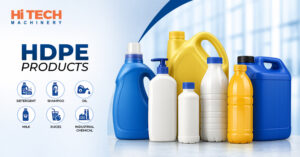
These bottles are widely used in packaging for different liquid products, such as:
- Detergents
- Shampoos
- Oils
- Milk
- Juices
- Industrial chemicals
- And so on
HDPE is preferred for these products since it is chemical-resistant, stress-resistant, and can tolerate temperatures from -73 °C to 88 °C.
An Overview of HDPE Bottles Market Growth & Potential
The current global HDPE bottle market is $64.04 billion. It is expected to be $79.12 by 2031, growing at a CAGR of 4.32%.
Do you know which region holds the biggest share?
It is Asia, with a regional split demand of 45%.
Pakistan plays a key role in achieving such a high-demand number due to its rising population, urbanization, and FMCG penetration.
The demand for HDPE bottles is so high in Pakistan that it has to import millions of HDPE bottles despite having local manufacturing facilities.
According to the import data we collected, Pakistan imports 40.8 million HDPE bottles every year, worth about PKR 10.39 billion in total.
Such a huge local demand is coming from many industries, such as:
- Detergent industry
- Beverage sector
- Dairy packaging
- Personal care products
- Pharmaceutical packaging
And so on.
This definitely creates a strong opportunity for new investors.
How are HDPE Bottles Manufactured?
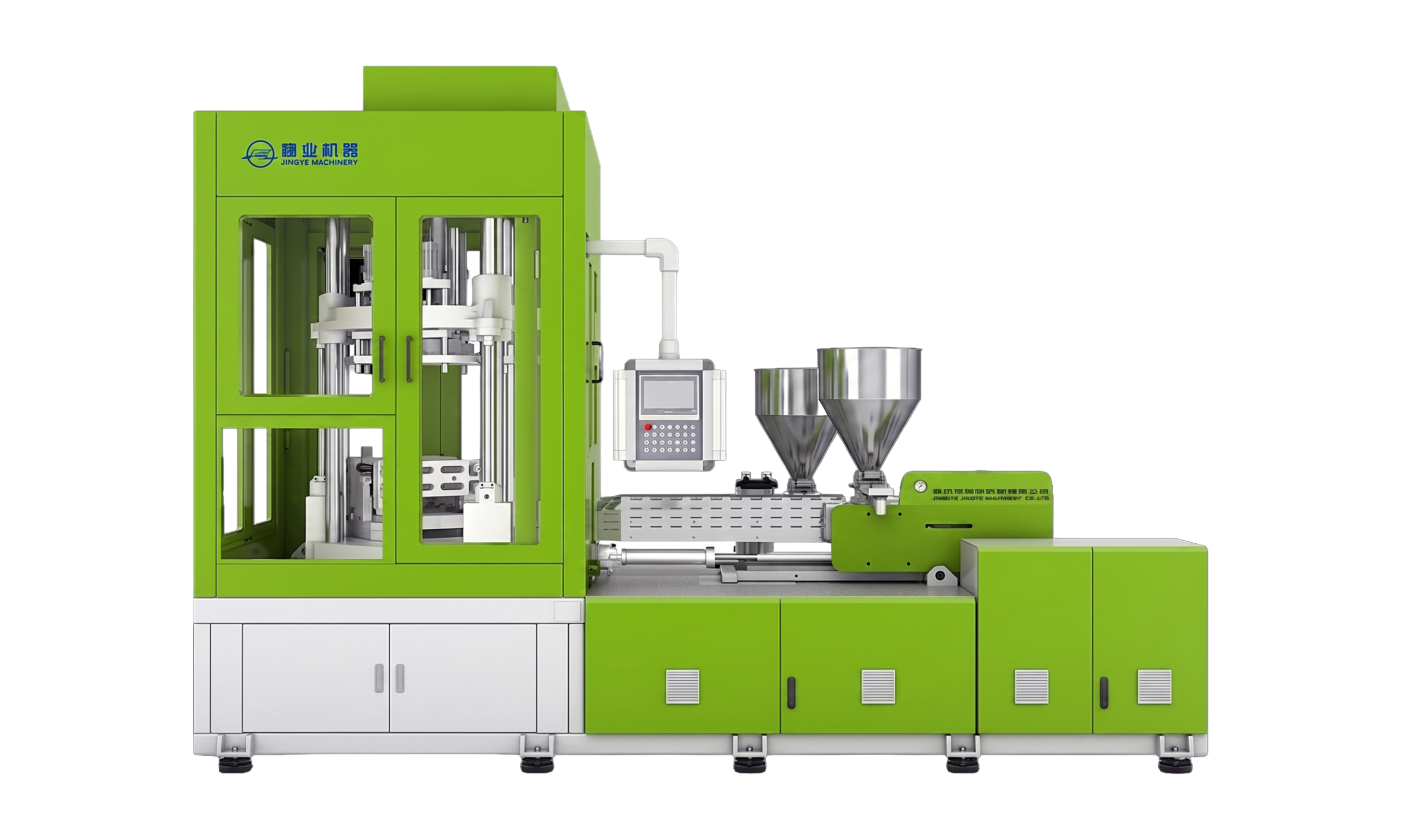
HDPE bottles are mainly produced using the Extrusion Blow Molding (EBM) process.
This is a continuous production method where raw HDPE resin is melted and shaped into desired bottles using air pressure.
Basic process flows like this:
- HDPE granules are fed into the machine
- Material is melted in the extruder
- Molten plastic is formed into a tube (parison)
- Mold closes around it
- Air is blown to expand the plastic into a bottle shape
- Bottle is cooled and ejected
This process is fast and suitable for mass production.
It is widely used because it can produce bottles in different shapes and sizes with high efficiency.
Types of Extrusion Blow Machines for HDPE Bottles
There are two main types of machines used in HDPE bottle production.
1. Linear Extrusion Blow Molding Machine
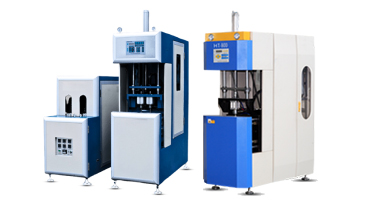
A linear extrusion blow molding machine (or shuttle machine) uses a sequential, stop-and-go process with stations arranged side-by-side.
Every station works step-by-step.
When Station 1 forms and blows the parison into shape, Station 2 cools and ejects the product. Station 2, then, takes the place of Station 1, and vice versa.
One stage needs to be completed before the next begins.
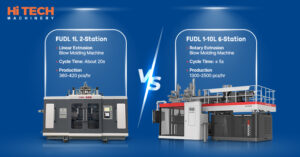
One example of a linear EBM machine is the FUDL SQHB-75-1L 2-Station Machine.
- Cycle time: ~20 seconds
- Production capacity: 360–420 pcs/hour
Linear machines are affordable, simple to operate/maintain, and suitable for small to medium-sized HDPE bottle production units.
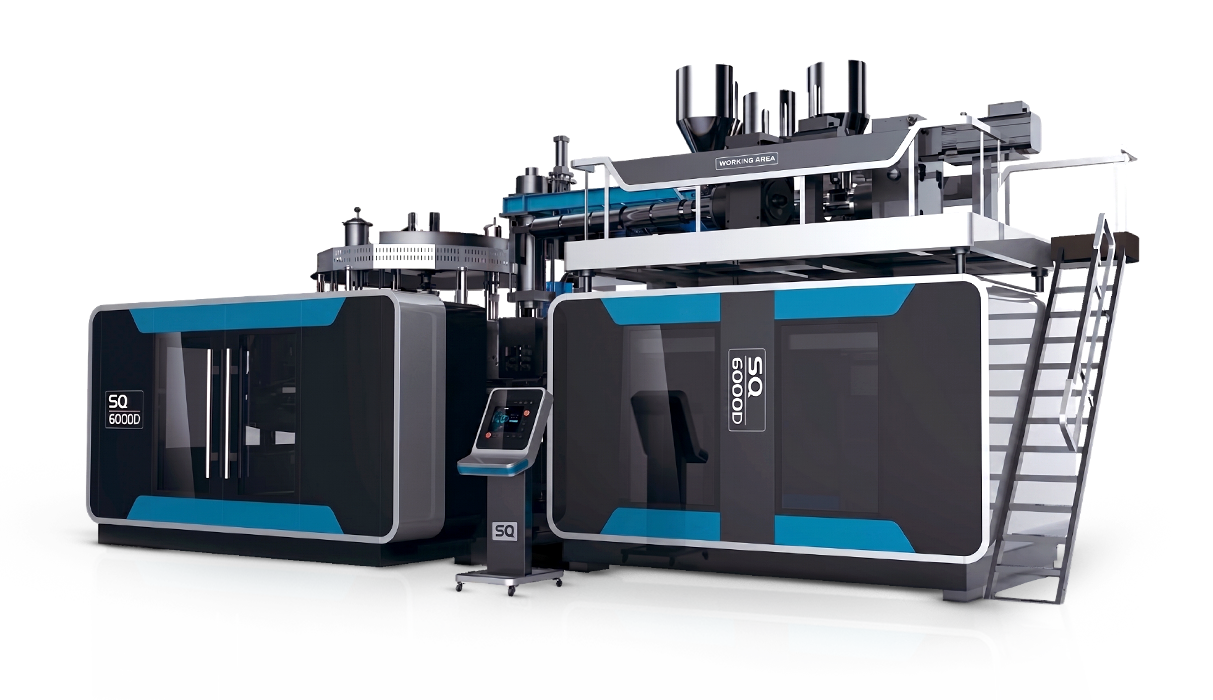
2. Rotary Extrusion Blow Molding Machine
A rotary EBM machine uses a rotating wheel (carousel) with multiple molds.
The wheel rotates, and each mold/station performs a different stage at the same time. One holds the parison, one blows air, another cools, and one ejects the finished product.
The rotation keeps happening, which creates a continuous production flow.
All the stations are active at the same time, doing a different task in the process.
Rotary machines are good for medium to high production demand.
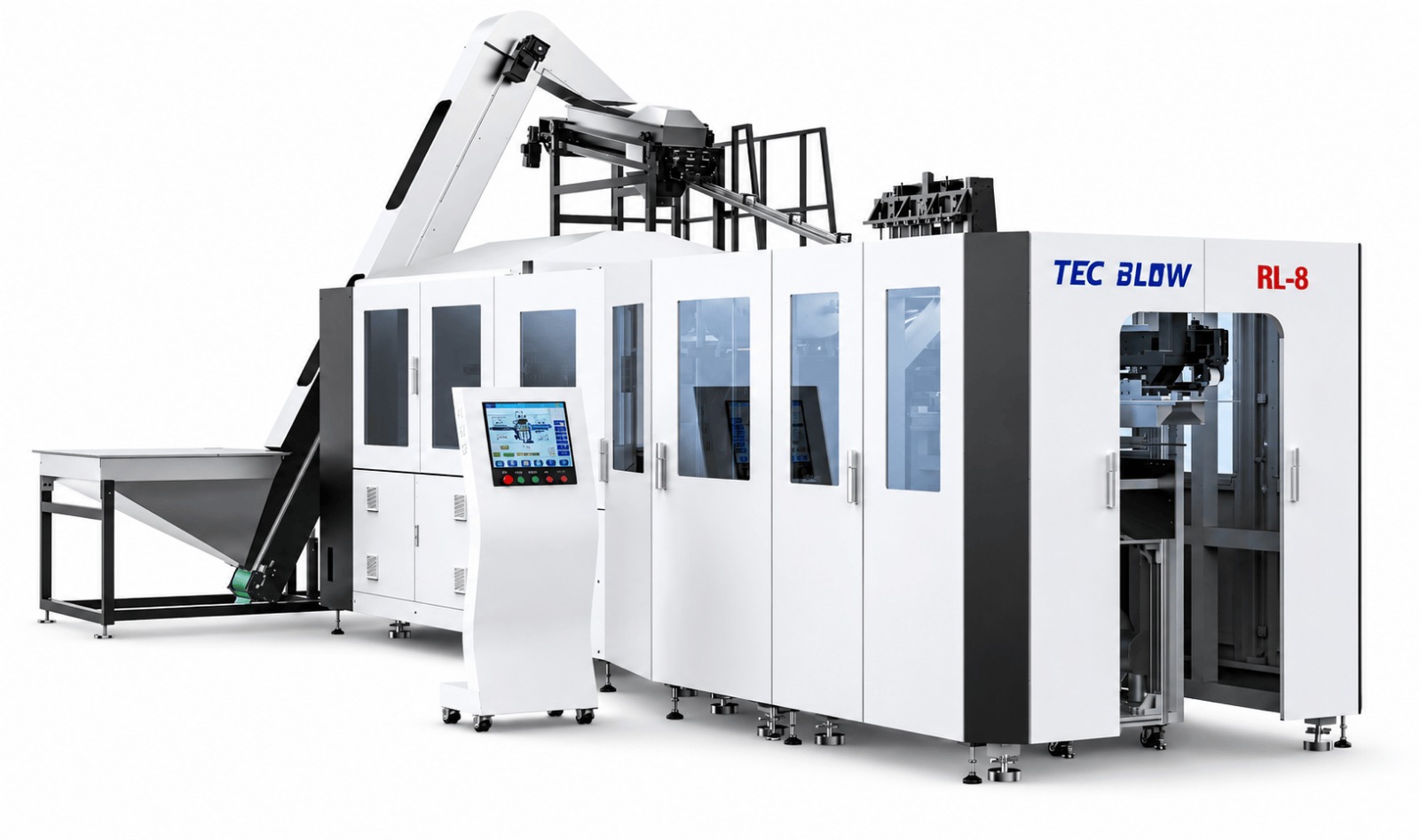
For example, FUDL 1-10L 6-Station Rotary Machine.
- Production capacity: 1300–2500 pcs/hour
- Cycle time: as low as 5 seconds
Rotary EBM machines are expensive but perfect for producing a higher number of HDPE bottles at the same time as linear EBM machines.
The Complete Setup for HDPE Bottles Production
A complete production line is not just one machine. It is a fully automated system where each part supports another. This system can also be AI-powered for complete automation.
A proper setup includes:
Main production system:
- Extrusion Blow Molding Machine
- Auto Loader
- Hopper Dryer
Material handling system:
- Color Blender
- Granulator
- Bottle Conveyor System
Utility systems:
- Air Compressor
- Air Dryer
- Water Chiller
Quality control & finishing:
- Auto Deflasher
- Leak Tester
- Bagger system
Each system has a specific role.
For example, the hopper dryer removes moisture from raw material, the water chiller controls mold temperature, the leak tester ensures bottles are sealed properly, and so on.
Without these supporting systems, production quality becomes unstable.
That is why complete setups are usually preferred instead of buying machines separately.
If you want to buy a particular piece of equipment within the whole EBM line, or even the complete setup line, HiTech Machinery can help you with that.
We provide integrated solutions where all these systems are designed to work together. These EBM machines, auxiliaries, robotic arms, AI-powered packing lines, and so on.
We want to reduce technical problems during your startup.
Investment, Operational Costs & Returns
As mentioned earlier, rotary EBM is more expensive to buy than linear EBM.
In this section, the initial upfront cost, operational expenses, and returns for a linear extrusion blow molding setup are explained in detail.
If you’re more interested in rotary EBM setup, assume a higher upfront setup cost and a lower per-unit manufacturing cost for HDPE bottles.
That said, here are the key details:
Upfront Cost
Consider investing this much into an EBM machine and molds with a production capacity of 360 to 420 bottles/hr (or 8,640 to 10,080 pcs/day).
| Item Name | Model / Spec | Price (USD) |
| Fully Automatic Extrusion Blow Molding Machine | FUDL-SQHB-75-1L
(Double Station, 75mm Screw, Hydraulic) |
$52,795 |
| MOOG Parison Controller | Japan MOOG 200 Points | $11,000 |
| Total (FOB China) | $63,795 |
After the EBM and molds, this is how much supporting auxiliaries cost (per 1 set each):
| Item Name | Qty | Price (USD) |
| Vacuum Autoloader (HAL-1.5P EU) | 1 Set | $600 |
| Air Cooled Chiller (HC-10ACI) | 1 Set | $4,435 |
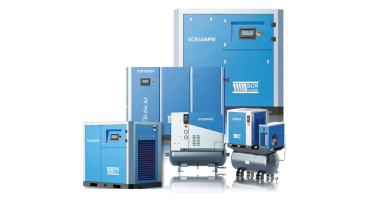
| Screw Air Compressor (SCR50APM) | 1 Set | $5,780 |
| Air Dryer (FG-75AC) | 1 Set | $1,375 |
| Air Filter (CTA Grade) | 1 Set | $260 |
| Air Storage Tank (1000L) | 1 Set | $1,300 |
| Crusher (HSS-500) | 1 Set | $2,415 |
| Total (FOB China) | $16,165 |
Total Amount FOB China in USD ($) = (Cost of EMB Machine & Molds) + Cost of Auxiliaries
= $63,795 + $16,165
= $79,960 USD (or 22,274,756 PKR Pakistan)
The complete linear extrusion blow molding manufacturing of an HDPE bottle production costs around $79,960 USD (FOB China).
Please NOTE that the given prices are as of 19th February 2026.
Production Cost
The actual production cost is different from setup to setup.
It depends on how much electricity is being consumed, maintenance of the manufacturing setup, spare parts, raw material cost/usage (as per bottle size and design, labor salaries, etc.
Remember, HDPE resin material accounts for 60%–70% of the total unit cost
To calculate the production cost per one HDPE bottle, we would need to consider a few things:
HDPE resin price: PKR 860 per kg
Bottle Weight: 50 grams
Bottle Volume: 1 litre
Material Wastage: About 2%
According to the recent January 2026 relief, the total industrial electricity rate is PKR 42 per unit (kWh) (approx.).
Since an average EBM machine can consume about 0.4 to 0.6 kWh per kg of processed plastic, the energy consumption expense will be PKR 0.8 to 1.2 for one 50g bottle.
Electricity Cost/50g bottle: PKR 0.8 to 1.2
Let us add up the cost related to staff salaries.
The minimum wage as of 2026 in Punjab/Sindh is PKR 40,000 per month.
Since at least 1 operator and 2 helpers are required per shift, the staffing is going to cost around 150,000 PKR/month.
Overall, in an EMB setup producing 5,000 bottles/day, labor and factory rent can cost around PKR 1.5 to 2.5 per bottle.
Here is the total production cost/50g HDPE bottle:
| Expense/Per Unit | Estimate Cost (PKR) | % of Total |
| Raw Material (HDPE) | 43 | 92.5% |
| Electricity | 1 | 2.1% |
| Labor & Overheads | 2 | 4.3% |
| Maintenance & Misc. | 0.5 | 1.1% |
| Total Production Cost/bottle | PKR 46.5 |
Estimated Profits
In a high-cost environment, wholesale market prices for empty 1L HDPE bottles typically range between PKR 58 and PKR 65, depending on the volume and bottle quality.
Profit margin can be about 10% to 18% in medium-sized volume.
One HDPE bottle can give you a per-bottle profit of about PKR 6 to 10 or even higher.
Different HDPE Bottles You Can Manufacture
One strong advantage of HDPE production is product diversity.
You are not limited to one industry. You can manufacture different types of bottles depending on molds and market demand.
| Household segment | Detergent bottles
Dishwash bottles Floor cleaner containers |
| Personal care segment | Shampoo bottles
Lotion containers Body wash bottles Conditioner packaging |
| Food and beverage | Milk bottles
Juice bottles Drinking water bottles |
| Industrial segment | Motor oil bottles
Lubricant containers Chemical storage bottles |
| Pharmaceutical segment | Syrup bottles
Medical liquid containers |
Where to Acquire the Needed Machinery & Equipment?
Getting your EBM setup is easy if you have the right supplier.
And HiTech Machinery is your ‘that’ partner.
We provide complete HDPE bottle production setups, including both linear and rotary extrusion blow molding systems, auxiliaries, molds, and everything related.
Along with the right set of equipment, we also provide:
-
- Proper machine installation
- Technical training for operators
- Mold design support
- Spare parts
- After-sales service
We make sure you come across no startup mistakes and help stabilize production fast. We ensure your plant, EBM system, product, team, and everything goes well.