



Electricity is an essential part of daily life. Whether in homes, factories, schools, or commercial buildings, every structure needs a functional electrical system. And within these systems, one key product that never goes out of demand is electrical conduit fittings. These fittings are crucial in safely routing and protecting electrical wires.
If you’re considering starting a manufacturing business, electrical conduit fittings are a solid opportunity. In this blog, we will cover how you can start your own electrical conduit fittings manufacturing business, the market potential, key machinery required, and much more.
What are Electrical Conduit Fittings?
An electrical system has two components to route electrical wires: conduits and fittings. I want to clarify that both of these are different parts, manufactured through separate methods.
Conduits are pipes that protect and route electrical wiring. Conduit Fittings are various types of connectors used in electrical conduit systems. These fittings allow for the connection, change of direction, or mounting of electrical systems. The focus of our blog will be the latter one.
Examples of Conduit Fittings: Options for Manufacturing
Conduit fittings are not a singular or pair of items; it’s a complete set of small parts, each for different types of parts.
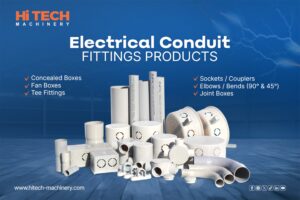
- Sockets / Couplers: To join two conduit pipes together.
- Elbows / Bends: To change the direction of the conduit (commonly 90° or 45° angles).
- Tee Fittings: For three-way connections.
- Fan Boxes: To support ceiling fans.
- Joint Boxes: For junction points and wire branching.
- Concealed Boxes: For switches and sockets inside walls
How Electrical Conduit Fittings Are Made
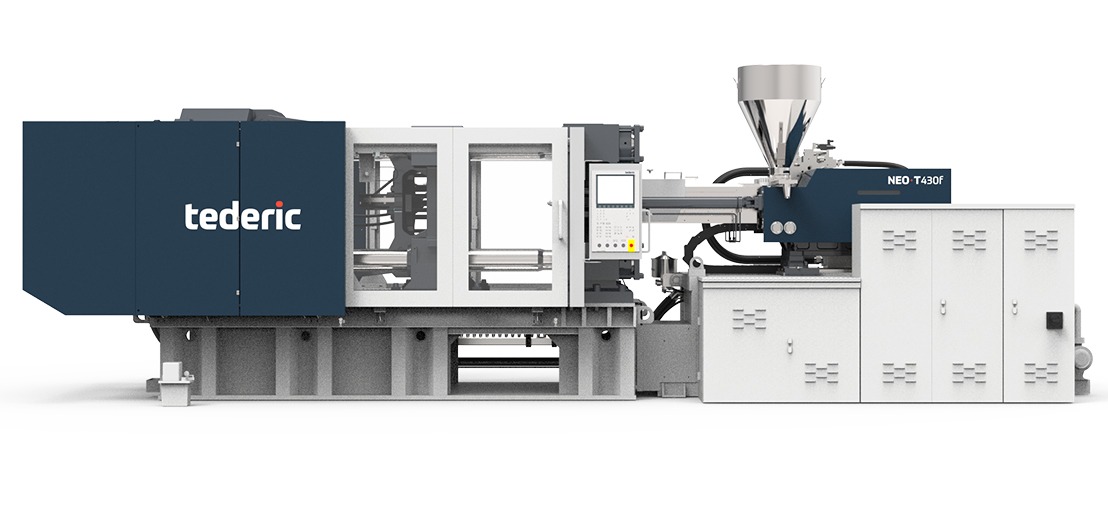
Electrical conduit fittings are primarily manufactured using injection molding machines, but a lot goes into the making of these parts. Here’s a quick overview of the process:
- Material Selection: The most common materials used for manufacturing electrical conduit fittings are PVC (Polyvinyl Chloride) and PP (Polypropylene). PVC has been so prevalent in the market that often you hear these fittings called PVC fittings or PVC conduit fittings.
- Injection Molding: The raw plastic materials are melted and injected into molds designed for various fittings. These molds determine the shape and size of the final product. Mold could be designed for anything, from elbows to couplers.
- Cooling & Ejection: After the plastic is injected into the molds, it is allowed to cool and harden. Once cooled, the fittings are ejected from the molds. Basically, ejection and cooling are done inside the injection machine; there isn’t a separate chamber for cooling.
- Flash Removal: Some fittings may require trimming of excess plastic to ensure a smooth and consistent product.
- Packaging: The finished fittings are then packed in standard packets and prepared for shipment to wholesalers.
The Market Opportunity – Why Electrical Conduit Fittings?
According to industry reports, the global electrical conduit market was valued at USD 6.5 billion in 2021 and is projected to reach USD 9.1 billion by 2026, growing at a CAGR of 6.9%. This growth is driven by the rapid pace of industrialization and urbanization, along with the rising global demand for electricity and power infrastructure.
The local market, if we speak in the context of Pakistan, is largely undocumented. Yes, there are a few brands, but a proper market isn’t available from any reliable source, though there’s a huge demand, considering the rising construction.
Why is Electrical Conduit Fittings a Profitable Business?
Electrical conduit fittings, although often overlooked, play a significant role in this market. Here’s why they represent a prime business opportunity:
1. Consistent Demand
No matter where you live, electrical conduit fittings are a necessity in construction and infrastructure. This market is not influenced by trends or seasonal demand, providing a reliable source of income year-round.
2. Bulk Orders and Repeat Business
A single construction project can require hundreds or even thousands of conduit fittings. These fittings are also used in repeat construction projects, which means consistent and recurring orders from contractors, wholesalers, and distributors.
3. Minimal Risk of Obsolescence
The design and size standards for electrical conduit fittings have remained relatively unchanged for decades. Although other industries face the challenge of innovation cycles and product obsolescence, the conduit fitting industry benefits from timeless designs and functional durability.
4. Low Production Complexity
The manufacturing process for electrical conduit fittings is relatively simple. Conduit fittings can be produced using injection molding machines, which is a highly efficient process for producing durable, consistent products. Once you invest in the machinery, the production process is straightforward and cost-effective.
5. Low Competition in Market
Well, there are few brands in the conduits and fittings market. However, if you play on quality and initially on price, you can set food in various local regions.
Machinery and Setup Required for Electrical Conduit Fittings Manufacturing
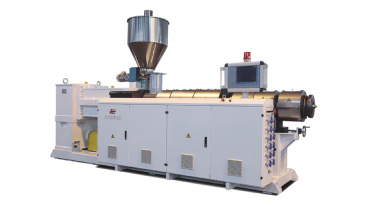
Starting a manufacturing business for electrical conduit fittings is relatively easy in terms of equipment. Here’s what you’ll need:
1. Injection Molding Machine
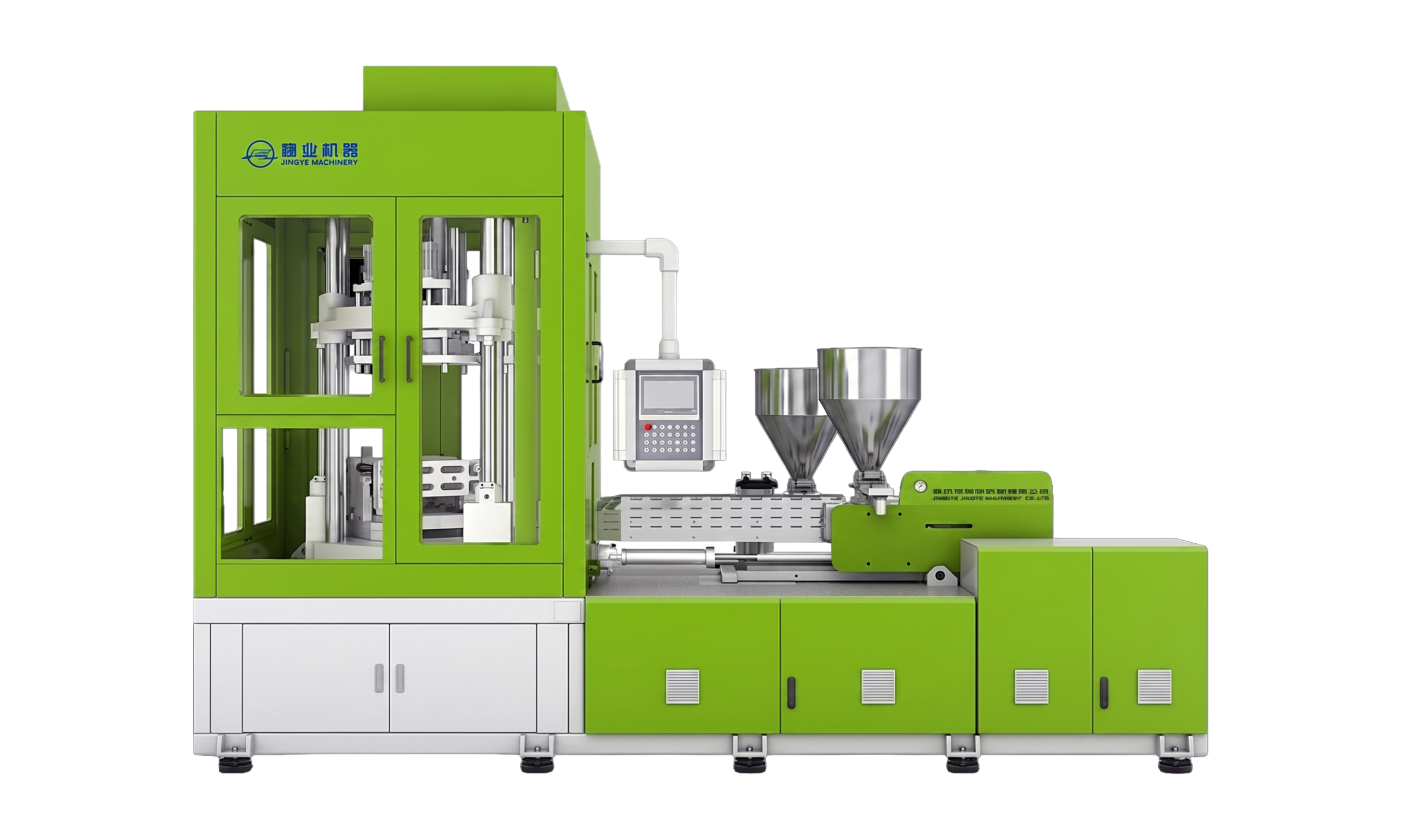
An injection molding machine is the heart of your manufacturing setup. The machine is used to inject melted plastic into molds that form the various conduit fittings. HiTech Machinery has injection machines from top brands, UWA and Tederic, that are reliable and stay in working order for years.
2. Molds for Fittings
Each type of electrical conduit fitting requires its own mold. These molds are carefully designed (with ejector pins and runners) to shape the plastic into elbows, couplers, or other types of fittings. High-quality molds are crucial for ensuring precision and minimizing defects in the final product.
3. Auxiliary Equipment
Besides the molding machine, you’ll need auxiliary equipment to support the production process:
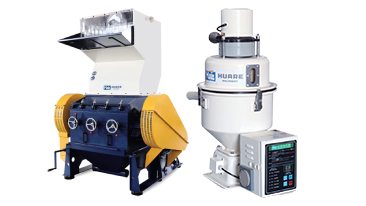
- Vacuum Autoloader: To feed plastic granules into the injection machine.
- Air-Cooled Industrial Chiller: To control the temperature and ensure consistent mold quality.
- Granulator: To recycle waste plastic for reuse in production.
- Color Mixer: To add color to the plastic if required.
4. Robotic Systems (Optional)
For larger operations, a robotic system can be used to automate the picking, stacking, and packing of the finished fittings. This increases efficiency and reduces manual labor.
Cost and Profitability of Electrical Conduit Fittings Manufacturing
Let’s take a look at the potential costs and profitability of manufacturing electrical conduit fittings:
Initial Investment Range (Important for Investors)
Investors typically want to understand the initial investment range required to start a manufacturing business. An conduit fittings manufacturing setup could cost between $70,000 to $123, 000. It could be at the lower end of this range, if you choose one injection molding machine and 5 to 6 molds, and at the higher end, if you aim to get all molds for fittings. .
Cost Breakdown
The cost of manufacturing electrical conduit fittings primarily involves the cost of raw materials (PVC or PP plastic), electricity, and labor.
- Material Costs: The cost per unit of raw materials is relatively low for PVC and PP. The PP rate is Rs 391 per kg ($1.37), and the PVC is Rs 354 ($1.24).
- Electricity: Since injection molding machinery is energy-intensive, electricity costs will be a significant part of the production cost.
- Labor: Labor costs will depend on the level of automation in your factory and the size of your workforce.
For a customized solution, you can reach out to Hitech Machinery; we’ll share a detailed breakdown of cost and a feasibility report.
How HiTech Machinery Supports Electrical Conduit Fittings Manufacturing
At HiTech Machinery, we provide everything you need to set up and run a successful electrical conduit fittings manufacturing business. Our services include:
- Injection Molding Machines: We supply high-quality machines that are perfect for small to large-scale conduit fittings production.
- Molds: Custom-designed molds for different types of conduit fittings.
- Auxiliary Equipment: Vacuum autoloaders, chillers, and other support machinery.
- Automation Systems: We offer robotic systems to automate the picking, stacking, and packaging of finished products.
Besides machines, we also offer local warranty, after-sales support, training & technical support, and spare parts for injection machines.
Partner with HiTech Machinery today and start your journey into the world of electrical conduit fittings manufacturing!